
Physiotherapy in Western Sydney
Most people who come to see us have been putting it off for a while. The pain started weeks ago, maybe months. They've tried stretching, rest, a heat pack, maybe a quick trip to the GP. Nothing has quite shifted it. That's usually when they book in with a physio.
Physiotherapy is one of the most evidence-based approaches available for musculoskeletal pain and injury. We offer physiotherapy across three of our clinics in Western Sydney: Liverpool, Parramatta and Eastern Creek. Our approach is hands-on, practical and focused on actually solving the problem rather than managing it indefinitely.
Whether you're recovering from surgery, dealing with a workplace injury, getting back to sport, or just tired of a back problem that won't budge, this is the right place to start.
What is Physiotherapy?
Physiotherapy is a regulated health profession focused on assessing, diagnosing and treating physical conditions that affect how you move and function. In Australia, all physiotherapists must be registered with AHPRA and hold at least a four-year university degree. A lot of practising physios carry additional post-graduate qualifications on top of that.
The way it actually works is pretty straightforward. Your physio assesses how your body moves, figures out what's causing the problem, and uses a combination of hands-on treatment and exercise to fix it. The goal isn't just to get you out of pain today. It's to understand why the pain is there in the first place and make sure it doesn't keep coming back.
One thing a lot of people don't realise: you don't need a GP referral to see a physio in Australia. Physiotherapists are primary healthcare providers, which means you can call a clinic directly and be seen the same day in most cases.
What Does a Physiotherapist Actually Do?
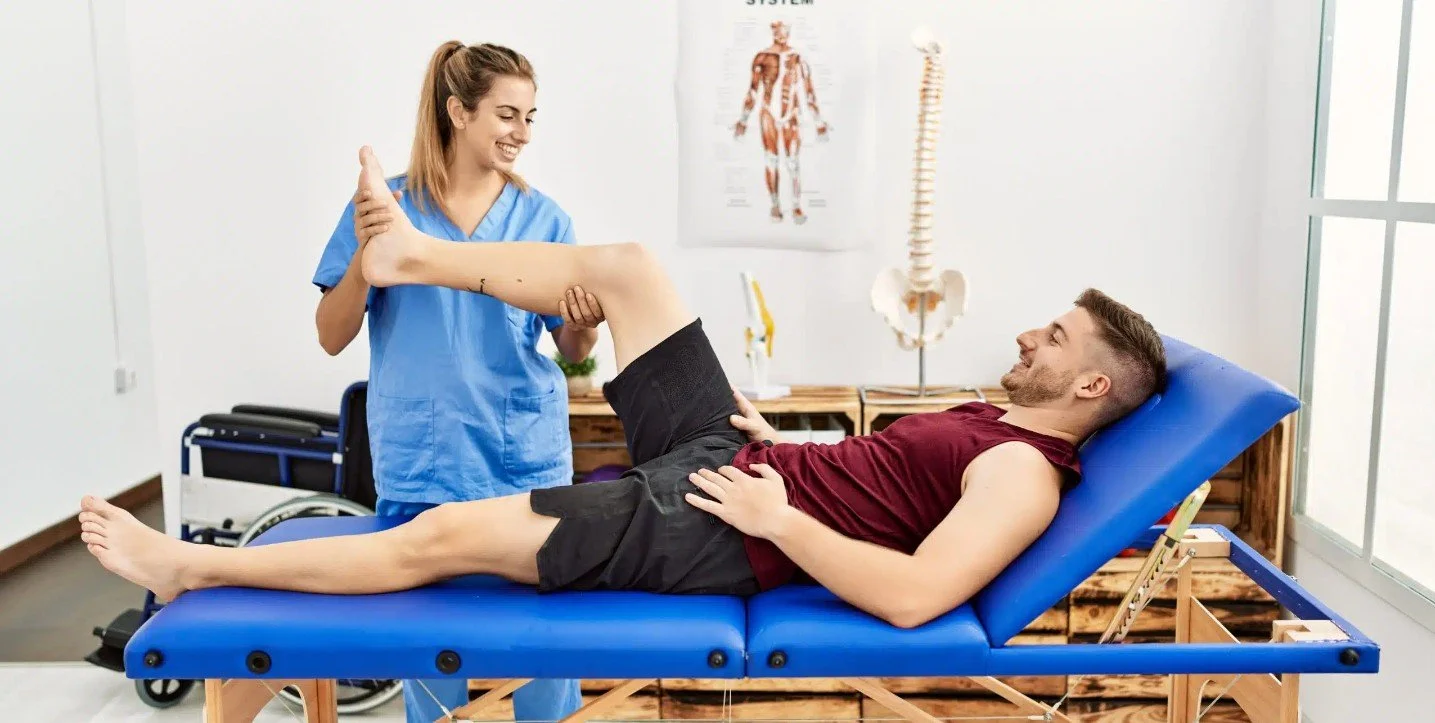
Every appointment at Vital Action Physio starts the same way: a proper one-on-one assessment. Your physio listens to your history, watches how you move, tests your strength and range of motion, and works out what's actually driving the problem. Not just where it hurts. Why it hurts.
Treatment from there is specific to you. Depending on what's going on, your physio might use a mix of the following:

Manual therapy: Hands-on joint mobilisation and manipulation to restore movement and reduce pain. Particularly effective for back pain, neck pain and stiff joints.
Dry needling: Targeting muscle trigger points with thin sterile needles to release deep tension. Most patients feel a real difference within a day or two.
Exercise therapy: A personalised program built around your job, sport and lifestyle. Not a generic handout. Exercises designed for your body and what you need to get back to.
Sports taping: Kinesiology and rigid taping to support injured structures and allow safe return to activity.
Ultrasound therapy: Therapeutic ultrasound to assist with healing in tendons and soft tissue injuries.
Education and self-management: Understanding your condition is one of the most powerful parts of recovery. You'll leave every session knowing exactly what's going on and what to do between appointments.
Conditions We Treat

The majority of what we see falls into the musculoskeletal category: pain and injuries affecting muscles, joints, tendons, ligaments and nerves. Here's a breakdown of the most common conditions we treat across our three clinics.
✅Lower back pain: The most common musculoskeletal complaint we see. From acute disc injuries to long-standing postural pain from desk work or manual labour.
✅Sciatica: Nerve pain running from the lower back through the buttock and into the leg. Often caused by disc herniation, piriformis syndrome or nerve compression.
✅Neck pain: Stiffness and pain from poor posture, prolonged desk work, driving or whiplash. Often comes with headaches and referred pain into the arm.
✅Spinal stenosis: Narrowing of the spinal canal causing pain, numbness and weakness in the legs. Physiotherapy is a key part of long-term management.
✅Shoulder pain and impingement: Pain and restricted movement from rotator cuff irritation, bursitis or impingement. Very common in physical roles and overhead activities.
✅Rotator cuff tears: Partial and full-thickness tears managed conservatively or with structured post-surgical rehab.
✅Frozen shoulder: Adhesive capsulitis causing severe stiffness and pain. Responds well to consistent manual therapy and graded movement.
✅Tennis elbow: Lateral epicondylitis from repetitive forearm use. Common in tradies, warehouse workers and racquet sport players.
✅Carpal tunnel syndrome: Nerve compression at the wrist causing numbness, tingling and weakness in the hand.
✅Knee pain: Meniscus injuries, patellofemoral pain, ITB syndrome and osteoarthritis. Common in sport and physical work.
✅ACL rehabilitation: Structured pre- and post-surgical programs to restore full knee function after ACL injury.
✅Ankle sprains: Acute sprains and chronic ankle instability from repeated injury. We restore strength and joint awareness to prevent re-injury.
✅Plantar fasciitis: Heel pain from overloaded plantar fascia. Responds well to manual therapy, dry needling and load management.
✅Hip pain and bursitis: Gluteal tendinopathy, trochanteric bursitis and hip osteoarthritis managed with targeted exercise and hands-on treatment.

Who Should See a Physiotherapist?
Physiotherapy isn't just for elite athletes or people coming out of major surgery. Most people will benefit from seeing a physio at some point, and most of the time the sooner you go the less work it takes to fix the problem.
In our three Western Sydney clinics we regularly treat:
Warehouse workers, tradies and transport drivers dealing with repetitive strain and lifting injuries
Office workers with desk-related neck pain, back pain and postural problems
Athletes from local clubs managing acute injuries and building performance
People recovering from knee, shoulder, hip or spinal surgery
NDIS participants working toward greater independence and mobility
Older adults managing arthritis, falls risk and age-related pain
Pregnant and post-natal women dealing with pelvic pain, back pain and pelvic floor issues
Children with developmental movement conditions
Anyone who's been managing pain for too long and is ready to do something about it
Physiotherapy vs Chiropractic vs Osteopathy
This comes up a lot. All three professions treat musculoskeletal pain, but the philosophy and approach are different.
Physiotherapy: Evidence-based and rehabilitation-focused. Uses manual therapy, exercise and education with a strong emphasis on building the patient's capacity to stay better long term. Regulated by AHPRA.
Chiropractic: Primarily focused on spinal manipulation to improve nervous system function. Strong manual therapy component, generally less emphasis on exercise rehabilitation than physiotherapy.
Osteopathy: A holistic approach treating the whole body using manipulation, soft tissue work and exercise. More focus on the relationship between structure and function than chiropractic.
If you're not sure which is right for you, a physiotherapy assessment is a good starting point. We'll give you an honest answer, including if we think you'd be better off elsewhere.
What to Expect at Your First Appointment
Your first appointment runs for about 40 to 60 minutes. Here's what happens:
1. History and assessment: Your physio asks about your pain history, what makes it better or worse, your job and your lifestyle. The more detail you give, the more accurate the assessment.
2. Physical assessment: You'll be asked to do some movements so your physio can see your range of motion, strength and any compensatory patterns. Wear comfortable clothing you can move in.
3. Diagnosis and explanation: Your physio explains what they found in plain language. You'll know exactly what's causing the problem before treatment begins.
4. Treatment: Depending on your condition, treatment might start in the first session. This could include manual therapy, dry needling, taping or exercise prescription.
5. Your plan: You leave with a clear plan. How many sessions you'll likely need, what to do between appointments, and what progress should look like. No vague timelines.
Funding Options and Medicare Rebates
Physiotherapy in Australia can be funded in several ways. Here's a straight breakdown of what's available:
Private health insurance: Most private health funds cover physiotherapy under extras cover. Rebate amounts vary by fund and policy. Worth checking before your first appointment.
Medicare — Enhanced Primary Care (EPC): If you have a chronic condition, your GP can refer you for up to 5 Medicare-subsidised physiotherapy sessions per calendar year under a GP Management Plan and Team Care Arrangement. The Medicare rebate is $58.30 per session and a gap payment applies.
Workers Compensation: If you've been injured at work, your employer's insurer covers physiotherapy treatment. You need a referral from your treating doctor. We manage the paperwork and liaise with insurers directly.
CTP Insurance: If you've been injured in a motor vehicle accident, physiotherapy is covered under CTP insurance. We're CTP certified across all three clinics.
DVA: Gold and White Card holders can access fully funded physiotherapy with a DVA referral. We accept DVA patients at Liverpool and Eastern Creek.
NDIS: Self-managed and plan-managed NDIS participants can use their funding for physiotherapy at any of our three clinics.
Private (self-funded): No referral needed. Call or book online. Our pricing is straightforward with no hidden fees.
Physiotherapy at Your Nearest Clinic
We have a dedicated physiotherapy page for each of our three Western Sydney clinics with location-specific information. Find the one closest to you:
Physiotherapy Liverpool
Our main clinic on Moore Street close to Liverpool Hospital. Serving Liverpool, Casula, Moorebank, Warwick Farm and surrounding suburbs.
Physiotherapy Parramatta
Our Parramatta clinic on Macquarie Street inside Jobfit Parramatta. Serving Parramatta, Westmead, North Parramatta, Harris Park and surrounding suburbs.
Physiotherapy Eastern Creek
Our Eastern Creek clinic inside the Occupational Medicine Centre. Serving Mount Druitt, Rooty Hill, Minchinbury, Doonside and surrounding suburbs.

Book Your Appointment
Vital Action Physio Liverpool
94 Moore Street, Liverpool NSW 2170
Inside Liverpool Medical Centre
Mon, Wed, Thu: 8:30am to 7:00pm | Tue: 8:30am to 6:00pm | Sat: 9:00am to 12:00pm
Vital Action Physio Parramatta
Suite 1, Level 1, 17-21 Macquarie Street, Parramatta NSW 2150
Inside Jobfit Parramatta. 6 min walk from Parramatta Station.
Vital Action Physio Eastern Creek
Shop 12/2A Southridge Street, Eastern Creek NSW 2766
Inside Eastern Creek Occupational Medicine Centre
Mon to Fri: 8:00am to 7:00pm | Sat: 8:00am to 1:00pm
Frequently Asked Questions
-
Loose, comfortable clothing you can move in. Shorts and a t-shirt work well for most assessments. If we're looking at your lower back, hips or knees, clothing that allows clear observation of movement helps.
-
It shouldn't cause significant pain. Some techniques like dry needling or joint mobilisation may be briefly uncomfortable, particularly in acutely inflamed areas. Your physio works within your tolerance and checks in with you throughout treatment.
-
It depends on your condition, how long it's been there and how your body responds. Most straightforward musculoskeletal injuries improve significantly within 4 to 6 sessions. Post-surgical rehab and chronic conditions take longer. We give you an honest estimate on day one.
-
No. Physiotherapists are primary healthcare providers in Australia so you can book directly without a GP referral. The exception is if you're accessing Medicare's EPC scheme, Workers Compensation, CTP, DVA or NDIS. All of those require a referral or supporting documentation from your treating doctor or plan manager.
-
Yes. Physiotherapy is one of the most effective non-pharmacological treatments for chronic pain. A combination of manual therapy, graded exercise and pain education helps break the cycle of pain, deconditioning and fear of movement that keeps chronic pain going.
-
Not under standard Medicare. However, if you have a chronic health condition your GP can refer you under a GP Management Plan and Team Care Arrangement for up to 5 Medicare-subsidised sessions per year. The rebate is $58.30 per session.
-
Yes, if your extras cover includes physiotherapy. Rebate amounts vary by fund and policy. Check with your fund before your first visit.
Related Services
Physiotherapy is often combined with other services across our Western Sydney clinics:
Dry Needling: Fast trigger point release for stubborn muscle pain.
Exercise Therapy: Personalised strength and mobility programs to build on your physiotherapy treatment.
Sports Injury Rehabilitation: Specialist sports physio for athletes at every level.
Workplace Injury Rehabilitation: Work Cover and CTP injury management from day one.
NDIS Physiotherapy: Goal-driven physiotherapy for NDIS participants across Western Sydney.